Dumpster Rental in Michiana
Dumpster rental means a roll-off container is placed on your property, you load it yourself during the rental period, and it is picked up when you finish. It suits remodels, cleanouts and debris that builds up over days. Volume sets how much fits; weight limits and excluded materials set what you can actually put in. Leave a message with your project, city and ZIP, and the placement spot. Sizes, dates and addresses are confirmed before any rental is agreed.
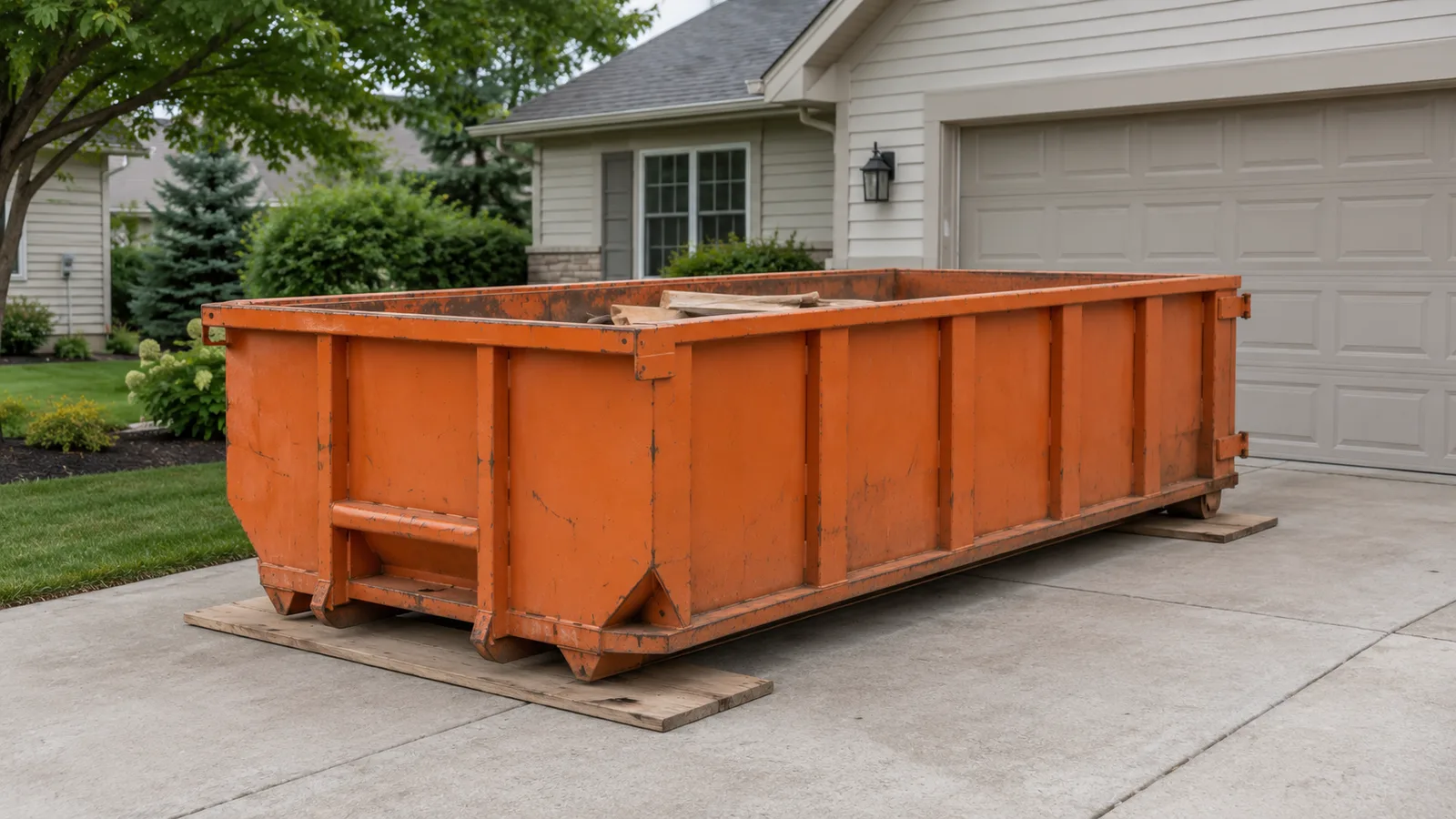
What dumpster rental involves and whether it fits the job
A container is delivered, you fill it at your own pace, and it is hauled away. The work is yours, so the method fits projects where debris comes out gradually, such as a remodel, a garage or basement purge or a roof tear-off.
If you would rather not lift anything, having a crew do the loading is a different service with different cost drivers. The last section of this page compares the two.
Compare container sizes by volume and load limit
Size is measured in cubic yards, which is volume. The comparison below uses 10, 15 and 20 yard classes. Exact capacity and dimensions vary by container, so confirm both in the quote.
Volume is not weight. Dense debris such as concrete, brick, dirt, tile and shingles can reach a weight allowance long before the container looks full, while bulky light debris fills space first. Ask for the included weight and the charge for exceeding it.
| Size class | Typical fit | Watch for |
|---|---|---|
| 10-yard container | Small cleanouts, a single room, a garage purge. | Heavy debris can exceed the weight allowance first. |
| 15-yard container | Kitchen or bath remodels, mid-size cleanouts, a single-layer roof. | Between sizes? Compare against the next size up. |
| 20-yard container | Larger remodels and whole-house cleanouts of bulky, lighter material. | Needs more driveway length and clearance. |
Material acceptance and dense-material restrictions
Rules differ by operator and disposal site, so confirm what you plan to put in before loading. These are commonly restricted or handled separately:
- Hazardous materials such as paint, solvents, oil, fuel and pesticides.
- Tires, batteries and pressurized tanks including propane.
- Appliances with refrigerant, electronics and mattresses, which often have separate rules.
- Medical waste and asbestos-containing material.
- Concrete, dirt, brick and similar dense material, which may need a different container or weight terms.
Driveway placement and delivery access
Placement is a quote input, not an afterthought. Check these before you request a container:
- Length and width of the driveway or other flat spot, plus a clear approach for a delivery truck.
- Overhead lines, low branches, gates, slopes and soft or newly sealed surfaces.
- Whether a street or right-of-way placement needs municipal permission. Ask your city or township before you request a container there.
- Any homeowner association or landlord rules.
- How surface protection is handled, if you want your driveway protected.
Rental period, included weight and possible extra charges
Terms are quoted per rental and differ between operators. Ask about each of these so two quotes can be compared on equal terms:
Price depends on the container size, rental period, weight and material type, plus delivery distance. Compare quotes on the same terms.
- Included rental days and the charge for each extra day.
- Included weight and the charge for each additional ton.
- Delivery and pickup area, and any travel surcharge.
- Material restrictions and any special-material fees.
- Whether tax applies and how long a quote stays valid.
What to include in a quote request
Keep volume, weight, days and placement as separate answers; they drive different terms.
- Materials: what goes in, and whether any of it is concrete, dirt, roofing or other dense debris.
- Volume: roughly how much debris, for example one room, a full garage or a whole house.
- Weight concern: yes or no, based on the materials.
- Rental days: when you want the container and how long you expect to fill it.
- City and ZIP code.
- Placement: the exact spot, the surface and the approach path. Stairs or a long carry from the house to the container belong here too.
- Optional photos of the debris and the placement area.
Delivery, pickup and extensions
Typically the container is delivered on an agreed date, you load it, and it is picked up when you are finished or when the rental period ends. If the project runs long, ask for an extension before the period ends, since extra days may carry a charge.
Leave a message with your project, city and placement details. A request is not a reservation: confirm the size, dates, price and terms before agreeing to a rental.
When full-service junk removal is the better fit
Choose a crew-loaded pickup when the job is a one-time pile, the items are heavy or upstairs, or a container will not fit. For a house with sorting and approval questions, start with estate cleanout planning.
For a few bulky items or appliances at an eligible South Bend address, the city describes a monthly curbside pickup at no charge, scheduled through a city account. See the South Bend 311 article for current eligibility. It does not replace a container for a remodel or cleanout.
Pricing
Container size, rental period, weight and material type drive the price. Ask what is included before you agree to a rental.
Frequently asked questions
What is dumpster rental?
A roll-off container is placed on your property, you load it yourself during the rental period, and it is picked up when you finish. Sizes, dates and addresses are confirmed before a rental is agreed.
How much does a dumpster rental cost?
Price depends on the container size, rental period, weight and material type. Describe the project and the placement spot in your request, and ask what the quote includes.
What is the difference between volume and weight?
Volume is how much space the container holds, measured in cubic yards. Weight is how heavy the load is. Dense debris such as concrete or dirt can reach the weight allowance before the container is full, so ask for the included weight and the excess charge.
How do I choose between a 10, 15 and 20 yard dumpster?
Match the size to the amount of bulky debris, then check weight and driveway length. The table on this page compares the 10-yard, 15-yard and 20-yard classes. Confirm sizes and dimensions in your quote.
What can I not put in a dumpster?
Hazardous materials, tires, batteries, propane tanks, medical waste and asbestos are commonly restricted, and appliances with refrigerant or electronics may have separate rules. Confirm any item before you load it.
What should I include in a quote request?
The materials, approximate volume, whether any are heavy, the days you need, your city and ZIP, the placement spot and surface, and optional photos of the debris and the placement area.
Should I rent a dumpster or book junk removal?
Rent a container when you will load at your own pace over several days. Choose junk removal when you want a crew to load the items.
Planning dumpster rental in Michiana?
Describe the job, the access and the timing, and confirm the scope and price before you agree to work.